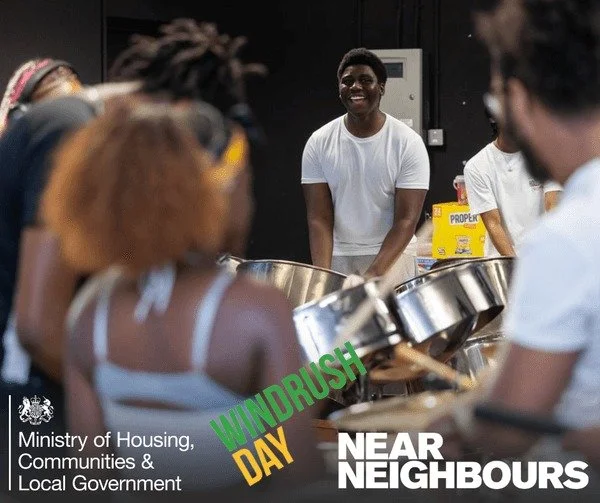
Windrush 2026
Windrush Day Grant Scheme 2026: Frequently asked questions
-
In order to mark the anniversary of the MV Empire Windrush docking in the UK, the Ministry of Housing, Communities and Local Government (MHCLG) is offering up to £500,000 in grant funding to support a new cohort of impactful and ambitious projects. As of today, HM Government has dedicated £4.75 million in funding toward honouring the Windrush legacy. This includes £3.75 million across seven years of the Windrush Day Grant Scheme (WDGS), and £1 million allocated to the National Windrush Monument, which stands as a fitting tribute to the contributions of the Windrush Generation and their descendants to the UK.
-
In line with the advice of UK Caribbean community stakeholders who have worked on previous iterations of the scheme, we define the Windrush generation as those people who emigrated from the Caribbean to the United Kingdom from the end of WW2, including the arrival of the MV Empire Windrush on 22 June 1948 until the Immigration Act 1971, their descendants and the wider UK Caribbean community.
The MV Empire Windrush arrived at the Port of Tilbury on 21 June 1948 and its passengers disembarked a day later. The ship carried several hundred Caribbean migrants, many of them veterans of the Second World War. Since then, the Windrush has come to symbolise the first movement of mass migration to the United Kingdom in the post-war era.
-
We are keen to build on the work that organisations up and down the country have done so far across the previous seven iterations of the WDGS. We are looking for unique, bold, creative, community-led, and culturally resonant proposals that engage with the Windrush story and Windrush communities in powerful, enterprising and thoughtful ways.
Projects need to be realistic about what is achievable within the scheme’s timeframe. Therefore, we strongly encourage proposals to set out manageable deliverables. Applicants will need to provide assurance that their organisations have the capacity to keep to their proposed delivery timetable and that they are able to commit to providing regular updates on their progress, including (but not limited to) project monitoring, evaluation forms and participant feedback forms, as required by MHCLG to assess the impact of the scheme. The project lead will also be required to take charge of informing Near Neighbours of progress.
We also ask that proposals demonstrate clearly how their project will work with local partners. These might include organisations such as museums, libraries and schools.
-
We will be looking for projects that achieve all the outcomes of the Windrush Day Grant Scheme.
Organisations must ensure that projects do not engage in political or extremist activity, do not promote partisan political views, and that they provide value for money.
‘Political activity’ is defined as using a grant to fund lobbying in order to undertake activities intended to influence or attempt to influence Parliament, government or political activity; or attempting to influence legislative or regulatory action.
-
Organisations are eligible to apply if:
a. They are registered:
a. Charities
b. Exempt charities
c. Community interest companies/Community Interest Organisation
d. Social enterprises
e. Community benefit societies
OR:
b. They meet all the following criteria as demonstrated by submitting additional supporting documents:
a. They are established for charitable, benevolent or philanthropic purposes
b. They have a governing body with at least three members
c. They have a governing document which they can produce
d. They can provide accounts demonstrating good financial health across both of the last two financial years
OR:
c. They are a local authority
Local authorities may include a county council; a district council; a parish council; a combined authority; a London borough council; or another organisation set out in Section 33(1) of the Local Government Act 2003. We encourage schools, libraries and other local authority organisations to submit bids in conjunction with their local authority.
(In order to be eligible all local authorities must apply as part of a consortium rather than as sole applicants, to ensure stronger collaboration and wider community benefit).
If your organisation’s charitable status is unconfirmed or unregistered, it may still meet the second set of eligibility requirements. This is also the case for many other types of organisations such as exempt charities and credit unions. Documents or copies of documents may be provided in physical or digital form, provided that any copies or scans are legible.
Organisations which meet neither set of requirements should, in the first instance, contact their local authority and request to be included as part of a bid from the local authority. Alternatively, your local authority may be able to provide connections with other similar organisations which are eligible.
-
Yes, the scheme is only open to applications from projects in England.
-
A group of bidders can apply. If applying as a consortium, organisations must have agreed a lead partner and project lead (individual) from one of the organisations to manage the programme. A Memorandum of Understanding (MoU) must also be established for dividing the work and funds between partners and for managing performance. The lead partner must be a charity, a community group with a charitable purpose or a local authority.
-
There is no limit on the number of organisations that can be involved in a consortium bid; however, there is a maximum limit on the amount a bid can request, which is £25,000. For consortium bids there must be a designated lead partner to manage the programme, and a system for dividing the work and funds appropriately and effectively. The lead partner must be eligible to apply for the scheme as specified in the Guidance for Applicants. Multiple local authorities working together, or organisations working together across multiple local authority areas, may be considered as part of a consortium bid.
-
Yes. Where Windrush Day Grant Scheme funding has been received in the past by an organisation, all previous conditions of that funding must have been met in order for organisations to be eligible for funding from the 2026 scheme. Neither your organisation nor any organisation within your consortium may have received Windrush Day Grant funding more than twice across the years 2021–2025. This is to ensure that funding is distributed as widely and fairly as possible.
-
You can apply to the scheme via the application form on our administrator Near Neighbours website here:
https://www.near-neighbours.org.uk/windrush26-homeApplications must be completed by 23:59 Tuesday 10th February 2026.
-
We opened the application process for proposals on 13th January 2026 and the application period closes at 23:59 on 10th February 2026. We will inform applicants of the outcome of their bids early May 2026.
-
We have a budget of up to £500,000 available to fund events and projects across the country, for a value of between £5000 and £25,000.
Please see the accompanying Guidance for Applicants for further details. Some bidders may be seeking funding below £5,000. In this case, they should contact their local authority to explore the possibility of inclusion in a larger bid.
-
22nd June each year marks National Windrush Day and projects must include a lead event or activity on this date. This will ensure that the 2026 Windrush Day Grant Scheme celebrates the anniversary of the arrival of the MV Empire Windrush docking in the UK.
All further events and activities must take place before the 31st July 2026.
We are keen to build on the experiences and work that organisations up and down the country have done so far across the previous seven years of the grant scheme. We are looking for innovative and exciting, culturally resonant proposals that engage with the Windrush story, enabling Windrush and wider communities to connect with it in powerful, enterprising, and thoughtful ways.
It should be noted that this funding is available for the 2026 scheme only.
-
Funding for all approved projects will be released in May 2026.
-
We will work with all successful applicants to ensure that appropriate monitoring and evaluation procedures are in place to chart the success of your project. An expectation of the evaluation process will be included in the grant funding agreement sent out to successful applicants. It is essential that evaluation processes are completed for each project. Failure to comply with expectations may impact eligibility for funding in future years.
-
This funding will support organisations to deliver projects which they would otherwise not have been able to deliver.
To ensure that Windrush Day Grant Scheme funding supports the work of as many communities around the country as possible, it is important for projects to demonstrate value for money. We will be looking at how organisations would make the most of the grant. Costs should be reasonable and proportionate. We would like to see proposals that involve the sharing of premises, people and equipment.
Organisations should be mindful of the staffing costs associated with their project and make efforts to limit how much of their allocated grant funding is used for this purpose.
-
Bids will be assessed according to the selection criteria, which can be found in the Guidance for Applicants. They will be made in accordance with HMG’s Code of Conduct for Recipients of Government General Grants and assessed in partnership with a board of community stakeholders, whose expertise in the Windrush community will guide decisions on project effectiveness and recommended funding levels A final recommendation will then be submitted to the relevant MHCLG Minister for approval.
Financial Due Diligence will be carried out and MHCLG completes robust due diligence checks to ensure that funding is awarded appropriately.
-
Organisations that do not directly work with Caribbean-heritage groups may still apply, but the applications must be created with, or informed by, the Windrush community, and you will need to let us know how you plan to engage and work with Windrush Communities as part of your application.
The Windrush generation and their descendants live and work in communities around the UK, and events and activities should engage with them, as well as with those from different age groups and ethnic backgrounds. Projects should therefore encourage communities to work together across generational and social divides.
To support community cohesion, bidders will need to demonstrate a genuine commitment to encouraging engagement and participation from people of diverse backgrounds, including those beyond Windrush communities.
Doing so will better enable the whole community to mark aspects of our shared UK identity.
-
An overview of the application process and what will be assessed is provided in the Guidance for Applicants document.
Near Neighbours will be hosting bidder workshops to provide an overview of the scheme and offer bidders a chance to ask questions.
The workshops will be held virtually on:
Monday 19th January 12:30 pm - 1:30 pm
Tuesday 20th January 6:00 pm - 7:00 pm
Wednesday 21st January 10:00 am - 11:00 am
Thursday 22nd January 5:00 pm - 6:00 pm
Please register here to attend:
https://www.near-neighbours.org.uk/windrush-workshop-signupPlease direct any queries relating to the grant scheme and the application process to our external administrator Near Neighbours at Windrush windrush@nearneighbours.org.uk
-
Projects may charge entry fees and/or for refreshments etc. at events that form part of their project. However, to be successful, they must demonstrate that the project will be accessible to the target audience and those living in the local community. Projects could seek sponsorship for their events as part of their additional sources of funding. Please include details on this in the application. To maintain the scheme’s emphasis on celebrating National Windrush Day and commemorating the Windrush generation, fees charged for entry and/or refreshments at events should be set at a level supporting operational costs of the project.
-
Funding provided through the Windrush Day Grant Scheme must be used for projects that specifically Raise Awareness, Foster Pride, and Encourage & Inspire Young People, about the contribution of the Windrush generation to the economic, social and cultural life in the United Kingdom. The funding cannot be used to fund wider work unrelated to the purpose and celebratory aims of this grant scheme.
-
We encourage proposals from outside London and the South East so that Windrush Day is actively celebrated across England. Each bid will be assessed on its own merit.
-
The Ministry of Housing, Communities and Local Government reserves the right to award a funding amount that is less than the amount requested in a project application.
-
No. Grant funds cannot be used for work that has already taken place. Funding can only be used for work/items that takes place after funding award and subject to due diligence checks. Windrush Day Grant Scheme funding can be spent on upcoming costs for projects that the bidding organisation has already begun to deliver, however it cannot be used to recoup costs that have already been incurred as part of these projects.
-
There is no standard rate we consider to be reasonable, as each project will vary in size and cost. Rather, each application will be assessed on its individual ability to achieve value for money and against marketplace value.
Bidders have the opportunity to explain how their proposal achieves value for money as part of the application form.
-
Organisations should not allow more than 25% of their bid to cover staff costs associated with running the project. Bidders have the opportunity to explain how their proposal achieves value for money as part of the application form.
-
No. However, we do require consortium partners to have in place a memorandum of understanding which displays the intention of the organisations to work together. The MoU must outline the division of roles, responsibilities and funding split between partners, as well as how performance will be managed.
-
If you have a question that is not answered here or in the Guidance for Applicants document, please email Near Neighbours at windrush@nearneighbours.org.uk
We regret that we are unable to advise on the suitability or strength of your project idea. We will endeavour to update this document with new answers to frequently asked questions as they arise.

Bidders’ workshops
Join us in person to find out more about how to apply.

Apply here!
Just click the button below to be taken to the application form.
gUIDANCE FOR APPLICANTS
Criteria: What are we looking for and how will we select projects?

Windrush 26 homepage
Return to the Windrush 25 homepage for grant details, project highlights, updates and more.
The process/schedule
Keep on eye on what stage of the process your application is at.
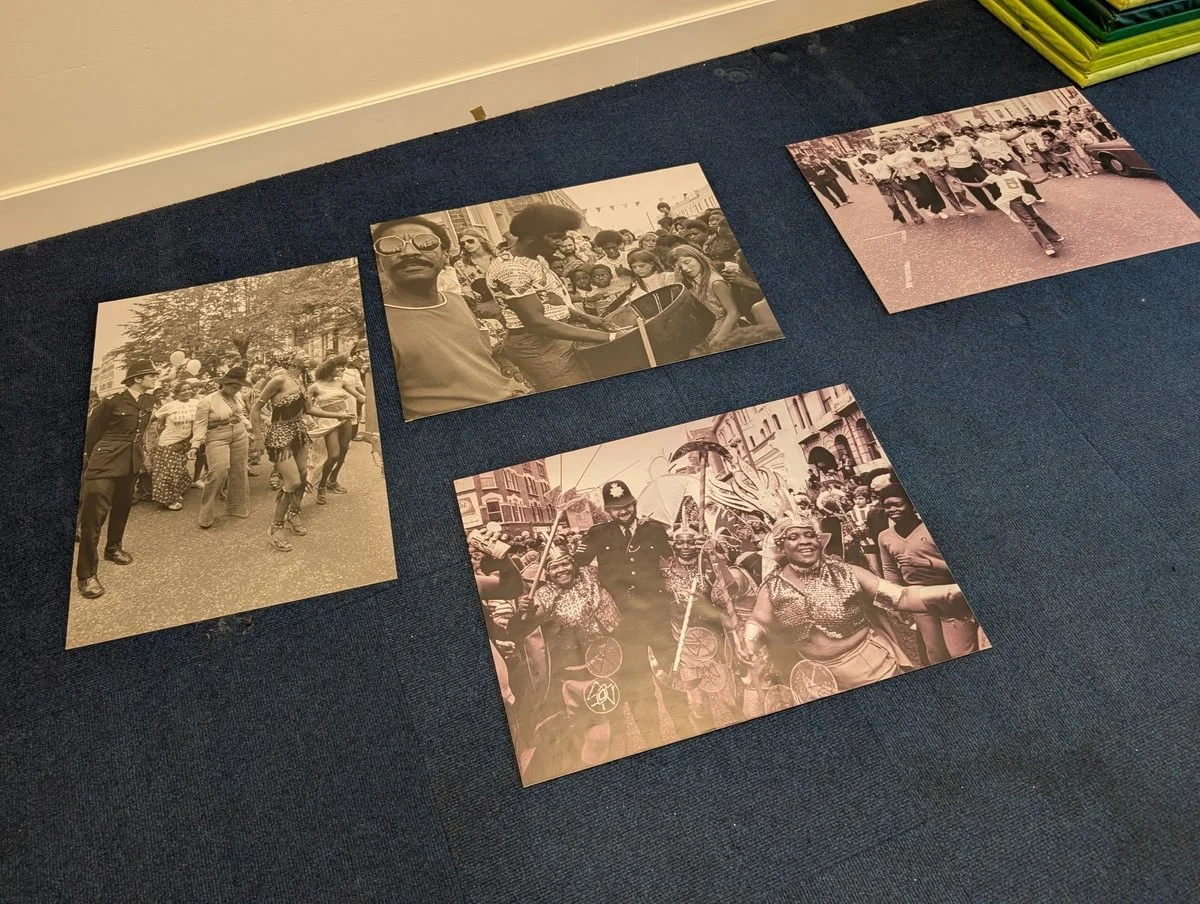
Click here to see Windrush 25 photos
〰️
Click here to see Windrush 25 photos 〰️
Keep up to date with our news - follow our socials or check out Instagram below…